.png "RGR Metal Solutions")
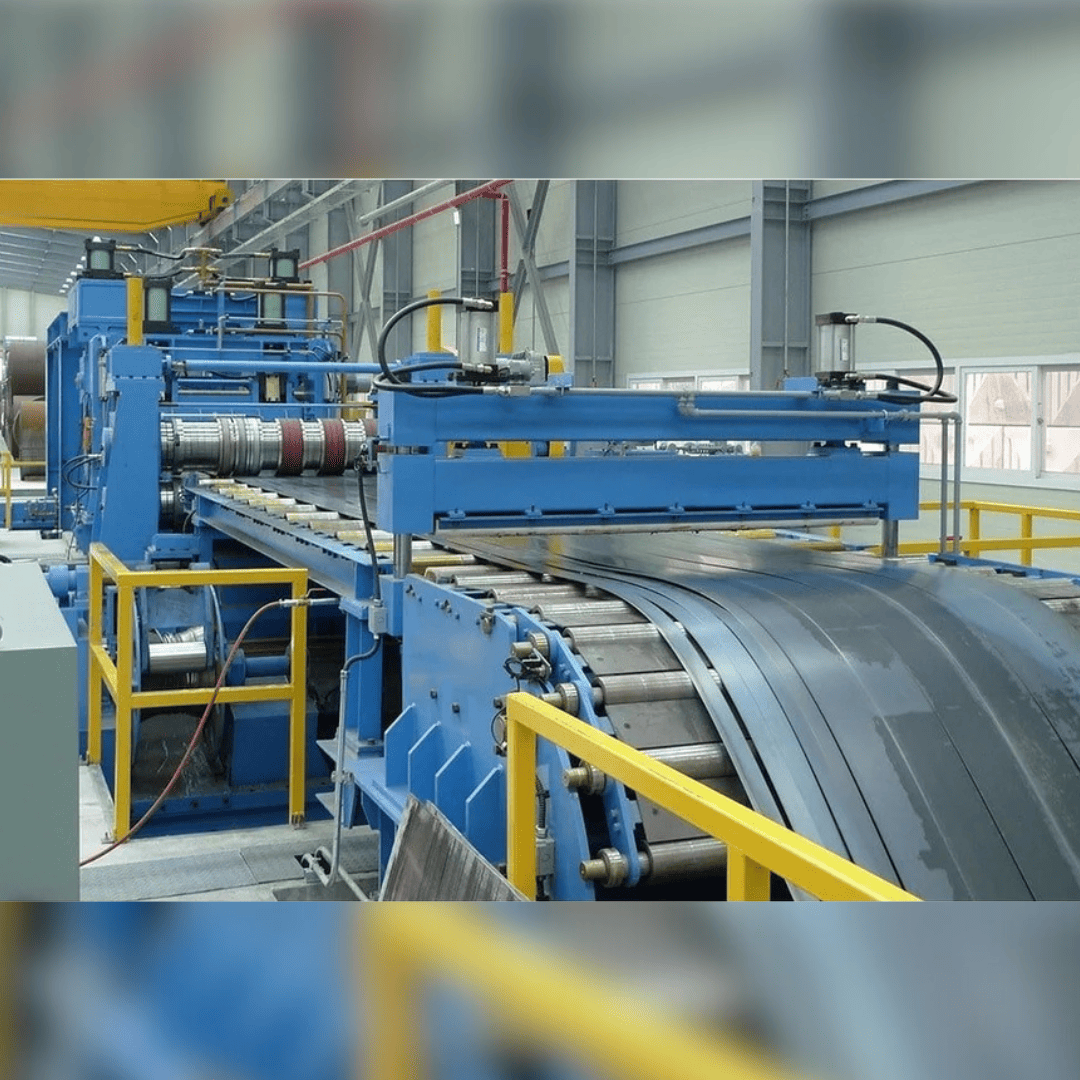
Slitting Machine Manufacturers In Nagaur
Nagaur is home to a growing number of Slitting Machine who cater to the increasing demand for high-precision cutting and slitting solutions. These manufacturers specialise in producing slitting machines that are ideal for materials like paper, foil, plastic, textiles, and various metal coils. With a focus on quality, efficiency, and advanced technology, Nagaurn companies are gaining recognition in both domestic and international markets.
The Slitting Machine in Nagaur offer customizable options to meet industry-specific requirements, ensuring durability and precision in every cut. At the same time, the Slitting Machine maintain a reliable inventory and offer prompt support, ensuring smooth operation and reduced downtime for clients. The industry is driven by innovation, and many suppliers and manufacturers invest in R&D to enhance machine performance.
Whether you're in packaging, printing, or metal processing, choosing trusted Slitting Machine Manufacturers in Nagaur and experienced Slitting Machine Suppliers in Nagaur ensures you get cost-effective, high-performance machinery built to last. With a commitment to quality and customer satisfaction, Nagaur's slitting machine sector continues to expand, offering advanced solutions for modern production needs.
Roll forming machine specifications
| Parameter | Specification |
|---|---|
| Machine type | Hydraulic roll forming machine |
| Material thickness | 0.3 – 3.0 mm |
| Forming speed | 8 – 15 m/min |
| Roller stations | 12 – 24 stations (customizable) |
| Roller material | 45# steel, chrome-plated |
| Main motor power | 7.5 – 15 kW |
| Hydraulic power | 4 kW |
| Cutting method | Hydraulic automatic cutting |
| Control system | PLC + touch screen (Siemens / Delta) |
| Input material | Cold-rolled / galvanized / color steel coil |
| Coil width | Up to 1250 mm |
| Coil weight capacity | Up to 5,000 kg |
| Machine dimensions | ~8,000 × 1,200 × 1,400 mm (L×W×H) |
| Machine weight | ~4,500 – 6,000 kg |
| Power supply | 380V / 50Hz / 3-phase |
| Applicable profiles | C / Z / U / Omega / custom sections |
| Tolerance | ± 1.0 mm |
Traditional vs. Modern roll forming machines (RGR Metal Solutions)
Understanding the evolution of roll forming technology helps you make informed investment decisions. Here is a comprehensive comparison of how modern machines manufactured by RGR Metal Solutions outperform conventional systems across every key parameter.
| Parameter | Traditional Machine | Modern Machine — RGR |
|---|---|---|
| Control & Automation | ||
| Control system Operator interface | Manual controls with basic relay logic; requires skilled operator at every stage Manual | PLC/HMI-based automation with touchscreen interface; one-touch profile changeover and real-time monitoring Automated |
| Profile changeover Time to switch profiles | 2–6 hours of manual roll adjustment and trial runs | 15–45 minutes with servo-driven auto roll adjustment and stored profiles Fast |
| Speed control Line speed management | Fixed-speed drive motors with limited speed variation | Variable frequency drives (VFD) enabling precise speed control from 0–100 m/min |
| Diagnostics | Fault detection relies entirely on operator observation | On-screen fault alarms, error logs, and predictive |
| Precision & Quality | ||
| Profile accuracy Dimensional tolerance | ±0.5 mm – ±1.0 mm tolerance; consistency degrades over long run | ±0.1 mm – ±0.2 mm tolerance maintained consistently across full production run Precision |
| Cut-Length Accuracy | Manual or basic mechanical cut-off; ±2–3 mm variance common | Servo-driven automatic cut-off with encoder feedback; ±0.5 mm or better |
| Roll tooling Material & grinding | Standard steel rolls with basic hardening; wears faster | Precision-ground, heat-treated D2 or GCr15 alloy steel rolls; longer service life Durable |
| Bow & twist control | Minimal correction capability; relies on operator skill | Integrated straightening and camber correction stations in the roll forming line |
| Production Efficiency | ||
| Production speed Output per hour | 15–30 m/min typical; limited by mechanical constraints Moderate | 30–120 m/min depending on profile complexity; higher throughput with consistent quality High |
| Material utilisation Scrap & wastage | Higher scrap rates during setup, changeover, and due to cut inaccuracies | Optimised roll design and servo cutting reduce material wastage by up to 15–20%Efficient |
| Downtime Planned & unplanned | Frequent stops for manual adjustments and mechanical wear | Reduced unplanned downtime via predictive sensors; quick-change roll systems cut setup time |
| Multi-profile capability | Typically dedicated to a single or very limited set of profiles | Quick-change tooling and servo adjustment enable efficient multi-profile production Flexible |
| Material & Application Range | ||
| Material thickness Processing capability | Optimised for narrow gauge ranges; limited high-strength steel capability | Handles 0.3 mm thin gauge to 6 mm heavy gauge including HSLA and galvanised steel |
| Coil handling | Manual coil loading; basic decoiler with limited tension control | Motorised decoiler, hydraulic expansion mandrel, and auto-feed straightener with tension control Integrated |
| In-line operations | Punching, notching, and embossing require separate offline processes | In-line punching, pre-notching, embossing, and hole-pattern stations available in one pass |
| Profile complexity | Suited for simple open and semi-closed profiles | Capable of complex, multi-bend, closed, and custom architectural profiles Advanced |
| Energy & Environment | ||
| Energy consumption Power efficiency | Fixed-speed motors run at full load continuously; higher power draw High | VFD-driven motors consume power on demand; 20–30% energy savings over traditional systems Efficient |
| Noise & vibration | Higher operational noise levels due to mechanical drives and lack of dampening | Enclosed drive systems, precision alignment, and vibration dampening reduce noise levels |
| Lubrication system | Manual greasing schedule; risk of under/over-lubrication | Centralised automatic lubrication system with programmable intervals for all critical points |
| Safety & Compliance | ||
| Safety systems | Basic mechanical guards; limited emergency stop coverage | Full CE/IS-compliant guarding, safety-rated E-stop circuits, light curtains, and interlocks CE/IS |
| Electrical standards | Legacy wiring; may not comply with current industrial electrical standards | Industry-standard control panels (IP54+), certified components, and earthing compliant with IS 3043 |
| Cost & Lifecycle | ||
| Capital cost Initial investment | Lower upfront cost Lower | Higher initial investment offset by lower operating costs and higher output value Higher ROI |
| Maintenance cost Annual OpEx | Frequent part replacements due to wear; higher long-term maintenance cost High | Predictive maintenance, durable components, and centralised lubrication reduce annual OpEx Low |
| Service & support | Dependent on local technicians; limited OEM support availability | Dedicated RGR after-sales team, remote diagnostics, AMC options, and spare parts support |
| Machine Lifespan | 10–15 years with intensive maintenance schedules | 15–25 years with modular upgradability for future technology enhancementsLonger |
Why RGR Metal Solutions? Every modern roll forming machine we manufacture integrates these advancements as standard — not as costly add-ons. From initial design consultation to installation, operator training, and lifetime technical support, RGR Metal Solutions delivers the complete solution for high-volume, high-precision metal forming in India.
.jpg)