.png "RGR Metal Solutions")
.webp)
Crimping Machine Manufacturers In Ranchi
| Price | ? 500000 / Piece |
| Capacity (Ton/Day) | 2 Ton |
| Material | MS |
| Automation Grade | Automatic |
| Finishing | Polished |
| Max Sheet Width | 1000 mm |
| Phase | 3 Phase |
| Voltage | 240 V |
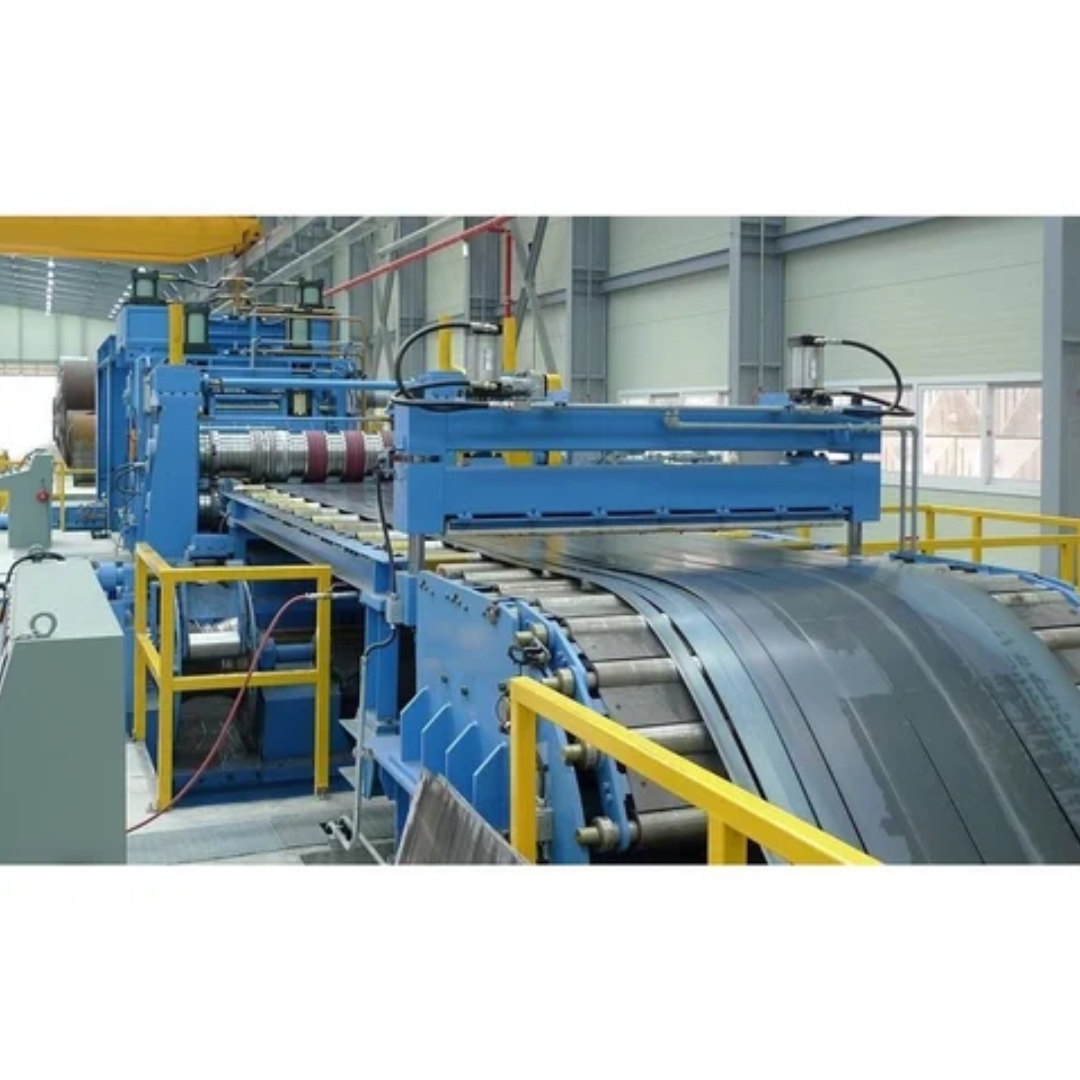
Crimping Machine are known for delivering robust, efficient, and high-performance machines designed to meet the diverse needs of industries such as automotive, electrical, and construction. These manufacturers focus on precision engineering and innovative designs that ensure consistent results and long-term durability. With advancements in technology, many Crimping Machine in Ranchi offer both manual and automatic models that are easy to operate, require minimal maintenance, and deliver high output with accuracy.
On the other hand, Crimping Machine Manufacturers in Ranchi play a crucial role in making these advanced machines accessible to businesses across the country. These suppliers ensure the availability of top-quality machines sourced from reputable manufacturers, offering a wide range of models to suit various industrial applications.
Crimping Machine Suppliers in Ranchi also provide excellent customer support, installation services, and after-sales assistance to ensure smooth and uninterrupted operations for their clients.With growing demand for high-precision machinery in the Ranchin manufacturing sector, Crimping Machine are continuously innovating and expanding their offerings. Investing in a reliable crimping solution is essential for ensuring operational efficiency and long-term business success.
Roll forming machine specifications
| Parameter | Specification |
|---|---|
| Machine type | Hydraulic roll forming machine |
| Material thickness | 0.3 – 3.0 mm |
| Forming speed | 8 – 15 m/min |
| Roller stations | 12 – 24 stations (customizable) |
| Roller material | 45# steel, chrome-plated |
| Main motor power | 7.5 – 15 kW |
| Hydraulic power | 4 kW |
| Cutting method | Hydraulic automatic cutting |
| Control system | PLC + touch screen (Siemens / Delta) |
| Input material | Cold-rolled / galvanized / color steel coil |
| Coil width | Up to 1250 mm |
| Coil weight capacity | Up to 5,000 kg |
| Machine dimensions | ~8,000 × 1,200 × 1,400 mm (L×W×H) |
| Machine weight | ~4,500 – 6,000 kg |
| Power supply | 380V / 50Hz / 3-phase |
| Applicable profiles | C / Z / U / Omega / custom sections |
| Tolerance | ± 1.0 mm |
Traditional vs. Modern roll forming machines (RGR Metal Solutions)
Understanding the evolution of roll forming technology helps you make informed investment decisions. Here is a comprehensive comparison of how modern machines manufactured by RGR Metal Solutions outperform conventional systems across every key parameter.
| Parameter | Traditional Machine | Modern Machine — RGR |
|---|---|---|
| Control & Automation | ||
| Control system Operator interface | Manual controls with basic relay logic; requires skilled operator at every stage Manual | PLC/HMI-based automation with touchscreen interface; one-touch profile changeover and real-time monitoring Automated |
| Profile changeover Time to switch profiles | 2–6 hours of manual roll adjustment and trial runs | 15–45 minutes with servo-driven auto roll adjustment and stored profiles Fast |
| Speed control Line speed management | Fixed-speed drive motors with limited speed variation | Variable frequency drives (VFD) enabling precise speed control from 0–100 m/min |
| Diagnostics | Fault detection relies entirely on operator observation | On-screen fault alarms, error logs, and predictive |
| Precision & Quality | ||
| Profile accuracy Dimensional tolerance | ±0.5 mm – ±1.0 mm tolerance; consistency degrades over long run | ±0.1 mm – ±0.2 mm tolerance maintained consistently across full production run Precision |
| Cut-Length Accuracy | Manual or basic mechanical cut-off; ±2–3 mm variance common | Servo-driven automatic cut-off with encoder feedback; ±0.5 mm or better |
| Roll tooling Material & grinding | Standard steel rolls with basic hardening; wears faster | Precision-ground, heat-treated D2 or GCr15 alloy steel rolls; longer service life Durable |
| Bow & twist control | Minimal correction capability; relies on operator skill | Integrated straightening and camber correction stations in the roll forming line |
| Production Efficiency | ||
| Production speed Output per hour | 15–30 m/min typical; limited by mechanical constraints Moderate | 30–120 m/min depending on profile complexity; higher throughput with consistent quality High |
| Material utilisation Scrap & wastage | Higher scrap rates during setup, changeover, and due to cut inaccuracies | Optimised roll design and servo cutting reduce material wastage by up to 15–20%Efficient |
| Downtime Planned & unplanned | Frequent stops for manual adjustments and mechanical wear | Reduced unplanned downtime via predictive sensors; quick-change roll systems cut setup time |
| Multi-profile capability | Typically dedicated to a single or very limited set of profiles | Quick-change tooling and servo adjustment enable efficient multi-profile production Flexible |
| Material & Application Range | ||
| Material thickness Processing capability | Optimised for narrow gauge ranges; limited high-strength steel capability | Handles 0.3 mm thin gauge to 6 mm heavy gauge including HSLA and galvanised steel |
| Coil handling | Manual coil loading; basic decoiler with limited tension control | Motorised decoiler, hydraulic expansion mandrel, and auto-feed straightener with tension control Integrated |
| In-line operations | Punching, notching, and embossing require separate offline processes | In-line punching, pre-notching, embossing, and hole-pattern stations available in one pass |
| Profile complexity | Suited for simple open and semi-closed profiles | Capable of complex, multi-bend, closed, and custom architectural profiles Advanced |
| Energy & Environment | ||
| Energy consumption Power efficiency | Fixed-speed motors run at full load continuously; higher power draw High | VFD-driven motors consume power on demand; 20–30% energy savings over traditional systems Efficient |
| Noise & vibration | Higher operational noise levels due to mechanical drives and lack of dampening | Enclosed drive systems, precision alignment, and vibration dampening reduce noise levels |
| Lubrication system | Manual greasing schedule; risk of under/over-lubrication | Centralised automatic lubrication system with programmable intervals for all critical points |
| Safety & Compliance | ||
| Safety systems | Basic mechanical guards; limited emergency stop coverage | Full CE/IS-compliant guarding, safety-rated E-stop circuits, light curtains, and interlocks CE/IS |
| Electrical standards | Legacy wiring; may not comply with current industrial electrical standards | Industry-standard control panels (IP54+), certified components, and earthing compliant with IS 3043 |
| Cost & Lifecycle | ||
| Capital cost Initial investment | Lower upfront cost Lower | Higher initial investment offset by lower operating costs and higher output value Higher ROI |
| Maintenance cost Annual OpEx | Frequent part replacements due to wear; higher long-term maintenance cost High | Predictive maintenance, durable components, and centralised lubrication reduce annual OpEx Low |
| Service & support | Dependent on local technicians; limited OEM support availability | Dedicated RGR after-sales team, remote diagnostics, AMC options, and spare parts support |
| Machine Lifespan | 10–15 years with intensive maintenance schedules | 15–25 years with modular upgradability for future technology enhancementsLonger |
Why RGR Metal Solutions? Every modern roll forming machine we manufacture integrates these advancements as standard — not as costly add-ons. From initial design consultation to installation, operator training, and lifetime technical support, RGR Metal Solutions delivers the complete solution for high-volume, high-precision metal forming in India.